
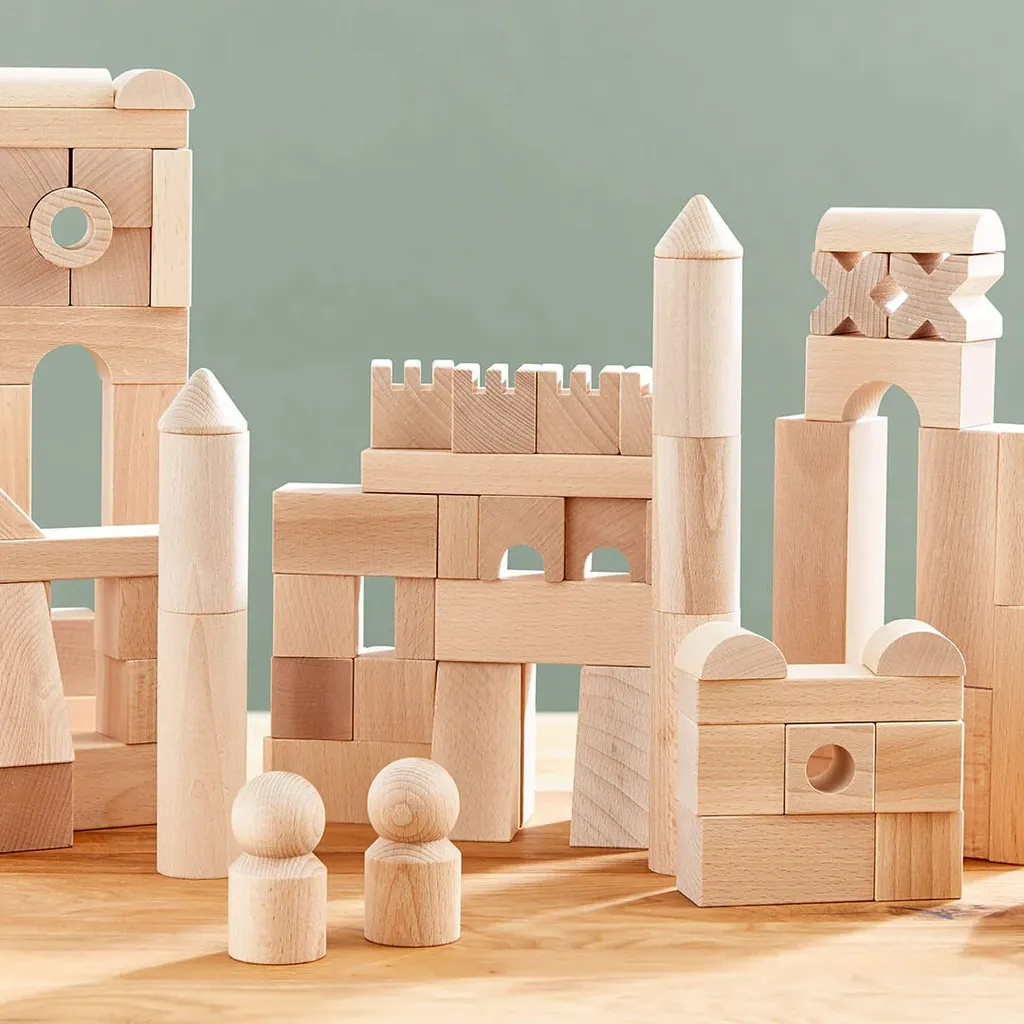
Giant Building Blocks offer children an exciting way to combine building, playing, and learning in one hands-on activity. Giant Building Blocks allow children to create towers, houses, bridges, forts, and imaginative environments while developing useful skills. With Giant Building Blocks, children can explore creativity, experiment with construction, and enjoy active pretend play. For families, educators, and childcare providers, Giant Building Blocks provide a flexible activity that can support learning while keeping children engaged and entertained.
The Value of Building, Playing, and Learning
Children learn naturally when they are given opportunities to explore the world around them. Construction play is particularly valuable because it allows children to make decisions, test ideas, and see immediate results.
A child building a tower is not simply stacking pieces. They are thinking about balance, position, size, and stability. When the tower falls, they can make adjustments and try again. This process combines creativity with practical learning.
Learning Through Hands-On Construction
Hands-on activities can make abstract concepts easier for young children to understand. Instead of only hearing about shapes or measurements, children can physically manipulate objects and observe how they work together.
Large construction pieces provide a simple way to introduce these experiences. Children can build, dismantle, rearrange, and rebuild as their understanding develops.
How Giant Building Blocks Encourage Creativity
Giant Building Blocks are designed for open-ended construction, giving children the freedom to decide what they want to create. There is no single correct result.
A collection of large pieces can become a castle in the morning, a garage in the afternoon, and a pretend city the next day. This flexibility encourages children to develop original ideas rather than simply copying a finished design. For more information about large building blocks for kids, explore their features, benefits, age suitability, and role in encouraging imaginative and educational play.
Imaginative Structures
Children can use oversized blocks to create structures based on their interests. Some may prefer houses and buildings, while others might create spaceships, animal shelters, bridges, or fantasy fortresses.
Once a structure is finished, it can become part of a larger pretend-play story. Children can invent characters and adventures that take place inside their creations.
Encouraging Creative Confidence
Allowing children to make their own construction choices gives them a sense of ownership. They can decide which pieces to use and how their project should develop.
Adults can encourage this confidence by asking questions instead of immediately providing solutions. Questions such as “What are you planning to build?” and “How could you make that stronger?” can help children explain and develop their ideas.
Building Important Developmental Skills
Construction play can support several areas of childhood development. Giant Building Blocks encourage children to use their hands, eyes, minds, and imagination during a single activity.
Fine Motor Coordination
Picking up, carrying, stacking, and positioning pieces requires controlled movement. Children practice coordinating their hands with what they see as they construct different structures.
The larger format can make pieces accessible to young children while still giving them meaningful opportunities to practice coordination.
Spatial Awareness
Children develop an understanding of space by observing how pieces fit together. They learn about height, width, distance, position, shape, and balance.
For example, children may discover that a wide base can support a taller structure or that uneven placement can cause a tower to lean.
Problem-Solving and Persistence
Construction involves challenges. A bridge may collapse or a wall may not connect as expected.
These moments provide opportunities for problem-solving. Children can identify what happened, adjust their approach, and test another solution. This encourages persistence and teaches them that mistakes can be part of the learning process.
Giant Building Blocks for Active Play
Playing with large construction pieces is not limited to sitting at a table. Children often move around their structures as they build.
They may carry pieces across the room, bend down to place them, stand up to reach higher sections, and walk around their finished creation.
Balancing Creativity and Movement
Indoor construction can provide a useful balance between focused thinking and physical activity. Children remain mentally engaged while naturally moving their bodies.
A spacious play area can make this experience even more enjoyable by allowing children to create larger structures without feeling restricted.
Social Learning Through Group Construction
Building can become a cooperative activity when children work together. A shared project gives them a reason to communicate and coordinate their actions.
Teamwork and Communication
One child might create the foundation while another builds a tower. A third child might design an entrance or pretend-play area.
Giant Building Blocks can support these group activities by giving children enough pieces to contribute to a shared project. They learn to exchange ideas, share materials, take turns, and solve disagreements.
Family Building Activities
Parents can participate in construction sessions as creative partners. Rather than taking control, adults can allow children to make important decisions.
A family could create a pretend village, rescue station, castle, or transportation center. The finished structure can then become the setting for a family storytelling activity.
Educational Activities With Construction Toys
Giant Building Blocks can be incorporated into simple educational games. Parents and teachers can introduce mathematics, language, science, and art concepts through construction.
Mathematics and Counting
Children can count how many pieces they use to create a structure. They can compare two towers to determine which is taller or sort pieces by size and shape.
Patterns can also be introduced. Children might create repeating sequences using different colors or shapes.
STEM and Engineering Concepts
Construction naturally introduces basic engineering principles. Children can explore stability, support, symmetry, weight distribution, and structural design.
Adults can encourage experimentation by asking children why a structure stands or falls. Children can then change the foundation or reposition pieces to test their ideas.
Giant Building Blocks for Pretend Play
Construction and pretend play complement each other. Once children create a physical environment, they can use it as the setting for imaginative stories.
Creating Different Worlds
A block-built structure can become a zoo, airport, school, restaurant, fire station, or space center. Each new setting encourages different forms of storytelling.
Children can assign roles, create characters, and develop imaginary situations around their construction.
Combining Toys and Building
Toy vehicles, stuffed animals, figures, books, and other age-appropriate play materials can be incorporated into construction activities.
For example, children can create a garage for toy vehicles or an animal shelter for stuffed animals. This expands the possibilities without requiring an entirely new set of toys.
Designing a Suitable Building Area
A dedicated construction space can make play more organized and enjoyable. Choose an area with enough floor space for children to move around their structures.
Storage and Organization
Because large blocks take up more room than small building pieces, convenient storage is important. Large bins, shelves, or dedicated containers can keep materials organized.
Children can also participate in cleanup by returning pieces to their storage location after each activity. This can encourage responsibility and organization.
Safety Considerations
Always choose age-appropriate construction materials and follow the manufacturer's recommendations. Inspect pieces regularly for damage, cracks, or sharp edges.
Children should have sufficient space to build and should not climb unstable structures unless the product is specifically designed for that activity. Younger children may require closer adult supervision.
Choosing the Right Giant Building Blocks
When selecting Giant Building Blocks, consider children's ages, abilities, available space, material, durability, piece size, and the number of pieces in the set.
Lightweight pieces may be easier for younger children to handle, while durable construction materials can be useful for classrooms and childcare environments.
Selecting for Different Play Environments
A home playroom may require a compact set that is easy to store. A classroom may benefit from a larger collection that supports group projects.
The most useful set is one that provides enough variety for children to construct different types of structures and revisit the activity repeatedly.
Keeping Construction Play Fresh
The same construction pieces can support countless activities. Parents and educators can keep children interested by changing themes and introducing new challenges.
One day could focus on building a castle, another on designing a city, and another on creating an animal habitat.
Creative Building Challenges
Simple challenges can encourage children to think differently. Ask them to create the tallest stable tower, construct a bridge between two areas, or design a house with several rooms.
The goal is not perfection. The purpose is to encourage experimentation, imagination, and independent thinking.
Frequently Asked Questions
1. What are Giant Building Blocks used for?
Giant Building Blocks can be used for construction, pretend play, creative projects, educational activities, group challenges, and hands-on learning.
2. What skills can children develop through building?
Children can develop coordination, spatial awareness, creativity, planning, problem-solving, communication, teamwork, and early mathematics and engineering skills.
3. Can Giant Building Blocks be used in classrooms?
Yes. They can support individual construction, small-group projects, STEM activities, imaginative play, and learning-center activities when age-appropriate.
4. How can parents make construction educational?
Parents can introduce counting, sorting, shape recognition, measurement, pattern creation, and simple engineering challenges during play.
5. Can children use Giant Building Blocks for pretend play?
Yes. Children can turn their structures into castles, cities, houses, garages, space stations, animal shelters, and many other imaginative environments.
Conclusion
Giant Building Blocks bring building, playing, and learning together in a flexible hands-on experience. Children can create structures, invent stories, solve construction challenges, and work collaboratively while developing valuable physical, cognitive, and social skills. From counting pieces and exploring balance to creating imaginary cities and castles, construction play can support learning without sacrificing fun. By providing a safe environment, suitable materials, and opportunities for open-ended exploration, parents and educators can help children make the most of every building session. With creativity and encouragement, Giant Building Blocks can become a versatile part of everyday play and an engaging tool for discovery, imagination, and growth.